

Root Canal Therapy in Weston, FL
A careful, stepwise approach that focuses on comfort and preserves your natural tooth.
Root Canal Therapy Explained
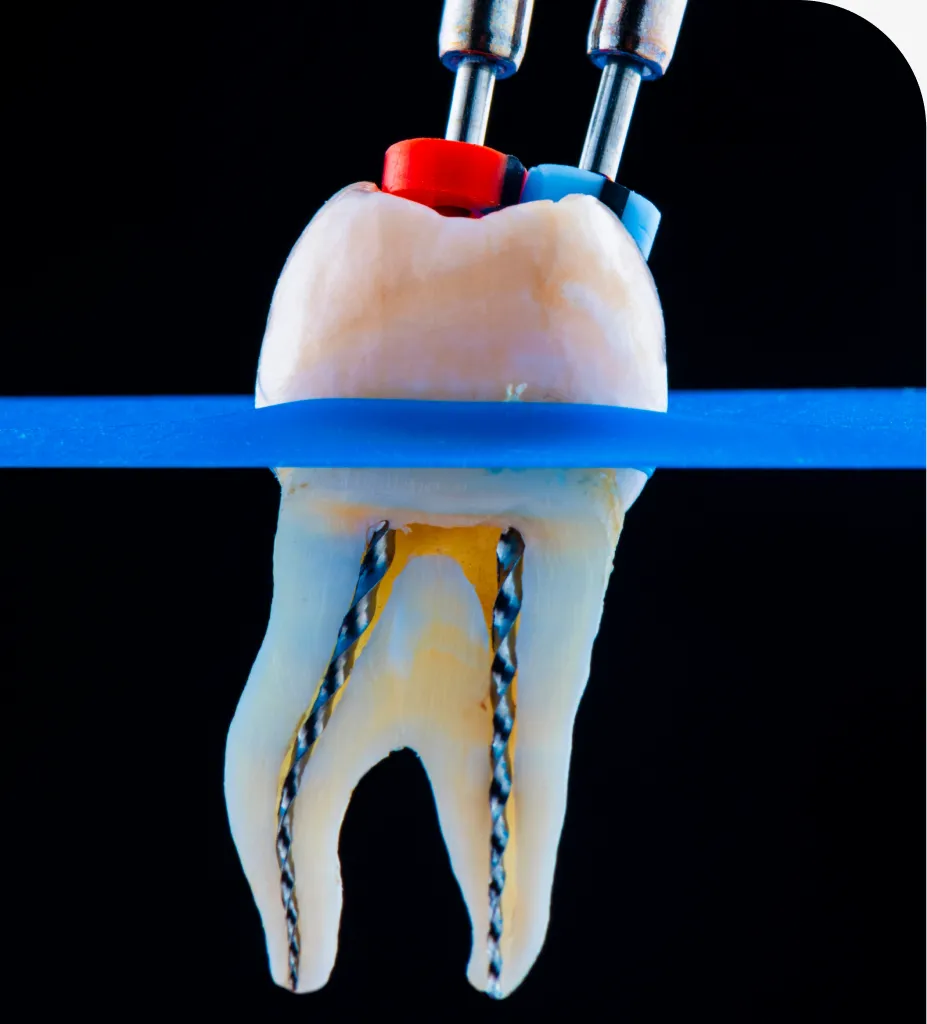
A root canal treats the soft tissue inside a tooth called the pulp. Deep decay, cracks, repeated dental work, or trauma can inflame or infect the pulp. Without care, the infection can spread and lead to pain, abscesses, and bone loss. During treatment, the inflamed tissue is removed, the canal spaces are disinfected, and the tooth is sealed.
How Root Canal Therapy Can Help You
Preserves Natural Tooth
Maintains chewing efficiency and normal bite alignment.
Removes Infection
Prevents swelling, bone loss, and spread of bacteria.
Relieves Pain
Reduces toothache and sensitivity so you can return to daily life.
Simpler Than Extraction
Often an easier path compared with extraction and replacement.
Long-Term Health
Supports oral health when paired with a crown and good hygiene.
The Root Canal Process
Here is how root canal therapy works from start to finish.
Assessment & Imaging
Clinical exam and digital X-rays confirm diagnosis and map the canals.
Comfort & Isolation
Local anesthesia numbs the tooth; a rubber dam keeps the area clean.
Cleaning & Disinfection
Infected tissue removed, canals shaped, and antibacterial rinses applied.
Seal & Restore
Canals filled with biocompatible material, sealed, then protected with a crown.
Gentle, Modern Care
With modern anesthesia and gentle technique, root canal therapy is designed to relieve pain, not cause it. Most people feel pressure rather than sharp discomfort and notice improvement soon after treatment. Preserving your natural tooth typically offers better chewing, easier cleaning, and helps maintain jawbone and alignment.
Signs You May Need a Root Canal
If you notice any of these symptoms, contact us promptly for evaluation.
- Persistent toothache that throbs or worsens when chewing.
- Sensitivity to hot or cold that lingers after the source is removed.
- Swelling, gum tenderness, or a pimple-like bump on the gums.
- Darkening of the tooth or a history of deep decay or fracture.
Recovery & Aftercare
Most root canals take one to two visits. Mild soreness is common for 24 to 48 hours and is often managed with over-the-counter pain relief. Chewing on the opposite side helps protect the tooth until the crown is placed. Most patients return to work or school the same day or the next day.
Frequently Asked Questions About Root Canal Therapy
Local anesthesia numbs the area so you should not feel sharp pain during treatment. Most patients report relief of their original toothache soon afterward.
Initial tenderness usually improves within one to two days. If a crown is planned, the tooth is fully restored after that visit, which is often within a few weeks.
Back teeth usually need a crown to prevent fractures. Front teeth may be restored with a filling or a crown depending on remaining tooth structure and bite forces.
Infection can spread and may lead to an abscess, bone loss, or systemic symptoms. Earlier care is linked to less discomfort and a higher chance of saving the tooth.
Many cases are completed in one visit. Complex molars, severe infections, or retreatment cases may require a second appointment for thorough cleaning and sealing.
Antibiotics can help control infection but do not remove diseased pulp tissue. Mechanical cleaning and sealing are needed to resolve the source of the problem.
Related Services
After root canal therapy, a dental crown is often placed to protect the treated tooth. Root canals are part of our broader restorative dentistry offerings, and regular general dentistry visits help catch problems early before they reach the pulp.