

Composite Root Fillings in Weston, FL
Tooth-colored restorations that protect exposed root surfaces and eliminate sensitivity.
Understanding Composite Root Fillings
Composite root fillings in Weston, FL are specialized restorations designed to treat decay on the root surfaces of teeth. Unlike the crown of a tooth, which is protected by hard enamel, root surfaces are covered only by a thin layer of cementum over softer dentin. When gum recession exposes these surfaces, they become highly susceptible to decay, sensitivity, and wear.
At Indian Trace Dental, Dr. Rodolfo Villa and Dr. Edgar Navarrete use advanced bonding techniques and moisture-control protocols specifically designed for root surface restorations. The composite resin seals the exposed area, stops active decay, and eliminates the sensitivity that many patients experience from hot, cold, or sweet stimuli.
Why Root Surfaces Are Vulnerable
Gum recession—from aging, periodontal disease, aggressive brushing, or orthodontic movement—exposes the root surface below the protective enamel line. This softer tissue decays faster than enamel and is more difficult to restore due to moisture and proximity to the gum line. Patients from Weston, Davie, Pembroke Pines, and Sunrise trust Indian Trace Dental for meticulous root surface restorations that seal, protect, and last.
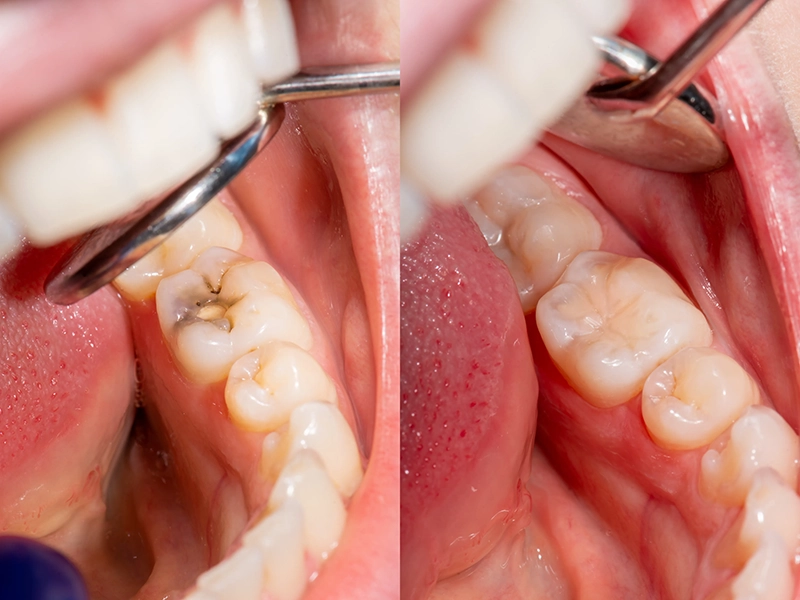
Benefits of Composite Root Fillings
Targeted protection for the most vulnerable areas of your teeth.
Tooth-Colored Match
Blends with the natural root and tooth color for a discreet, aesthetic restoration.
Protects Exposed Roots
Seals vulnerable root surfaces to prevent further decay and sensitivity.
Reduces Sensitivity
Covers exposed dentin tubules that cause pain from hot, cold, or sweet stimuli.
Conservative Treatment
Minimal tooth preparation preserves remaining healthy root structure.
Bonds to Dentin
Advanced adhesive systems create a reliable seal on the softer root surface.
Single-Visit Procedure
Completed in one appointment with immediate function and comfort.
The Root Filling Process
A careful, technique-sensitive procedure completed in one visit.
Diagnosis & Assessment
Root cavities are identified through clinical exam, probing, and X-rays. Location, depth, and proximity to the nerve are evaluated.
Isolation & Anesthesia
The area is numbed and carefully isolated from moisture, which is critical for successful bonding on root surfaces.
Decay Removal
Softened, decayed root structure is gently removed with hand instruments or slow-speed rotary tools to preserve healthy tissue.
Bonding & Placement
A specialized adhesive is applied, followed by composite resin layered and cured to rebuild the missing root structure.
Shaping & Polish
The restoration is contoured to match the natural root anatomy and polished smooth to discourage plaque accumulation.
Preventing Future Root Decay
After treatment, protecting exposed root surfaces is essential. Use a soft-bristle toothbrush with gentle technique, brush with fluoride toothpaste, and consider a prescription fluoride rinse if recommended. Regular dental cleanings help monitor recession and catch new root cavities early. For teeth with standard crown decay, composite fillings or inlays and onlays may be more appropriate depending on the location and extent of damage.
Frequently Asked Questions About Composite Root Fillings
Composite root fillings are tooth-colored restorations placed on the root surfaces of teeth to treat decay that develops below the gum line or at the cervical (neck) area of the tooth where the enamel meets the root.
Root surfaces lack the protective enamel covering that crowns have. When gums recede due to aging, periodontal disease, or aggressive brushing, the exposed root (cementum and dentin) becomes vulnerable to decay.
The materials are similar, but the technique differs. Root surfaces are softer, more moisture-sensitive, and often closer to the nerve. Special bonding protocols and material choices are used to ensure a durable, long-lasting seal.
Local anesthesia numbs the area completely. Some patients with root sensitivity may feel mild discomfort afterward, which typically resolves within a day or two.
Use a soft-bristle toothbrush to avoid further gum recession, brush with fluoride toothpaste, floss daily, and attend regular dental cleanings. Your dentist may also recommend a prescription fluoride rinse or gel.
With proper oral hygiene and regular checkups, composite root fillings can last 5–7 years or more. The softer root surface and moisture exposure near the gum line can challenge longevity, making home care and follow-up essential.