

Inlays & Onlays in Weston, FL
Custom-crafted porcelain restorations that bridge the gap between fillings and crowns.
What Are Inlays and Onlays?
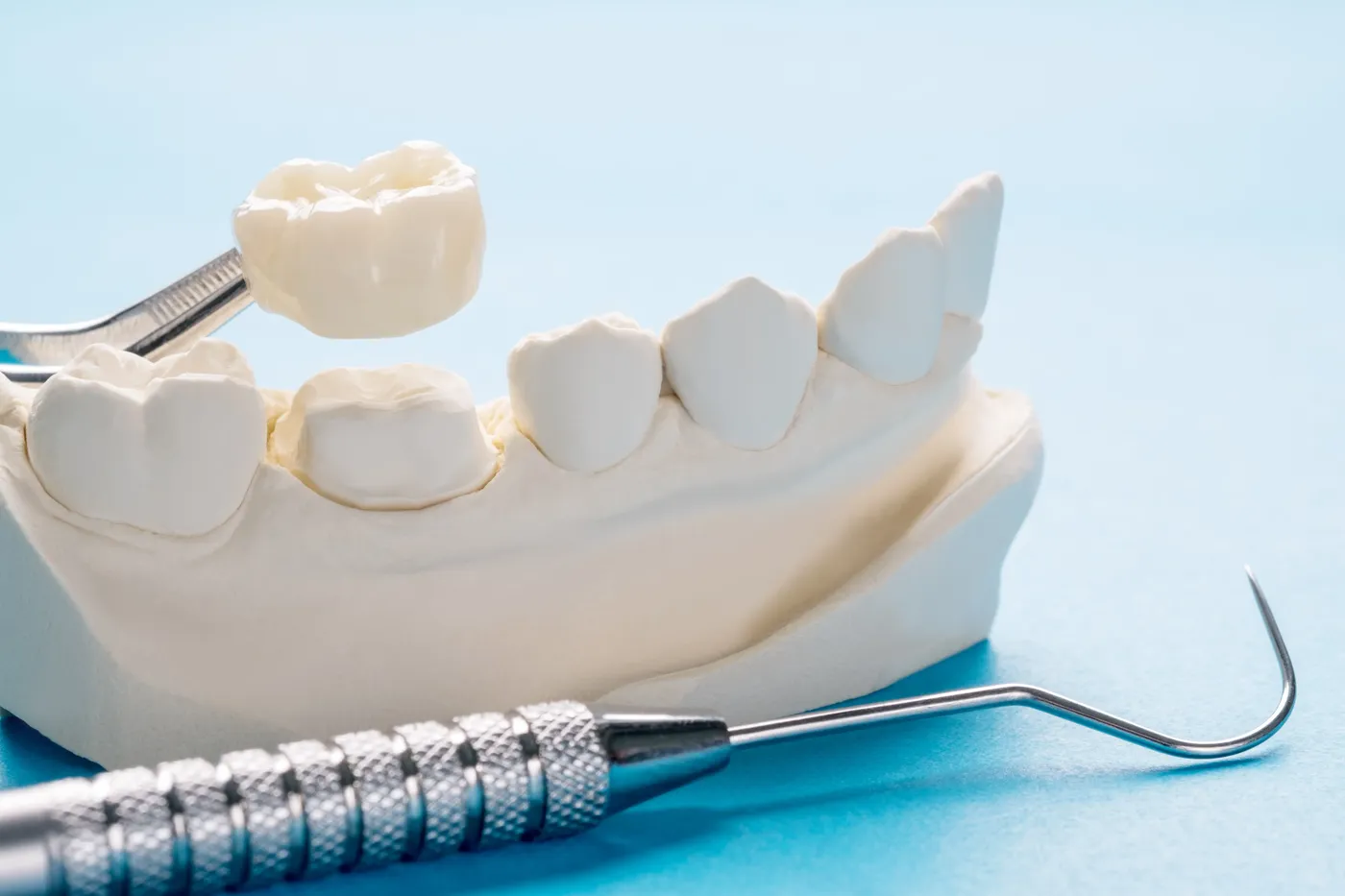
Inlays and onlays in Weston, FL are custom-fabricated restorations designed for teeth with moderate decay or damage—too much for a simple filling but not enough to warrant a full crown. An inlay fills the space within the cusps of a tooth, while an onlay extends over one or more cusps to cover a larger area. Both are made from durable, tooth-colored materials for a natural, long-lasting result.
At Indian Trace Dental, Dr. Rodolfo Villa and Dr. Edgar Navarrete use high-quality porcelain and precise digital impressions to create inlays and onlays that fit beautifully and function reliably. This conservative approach preserves maximum healthy tooth structure while providing superior strength compared to direct composite fillings.
The Conservative Alternative to Crowns
When a tooth has too much damage for a filling but enough healthy structure to avoid a full crown, an inlay or onlay provides the ideal middle ground. By restoring only the damaged portion, more of your natural tooth is preserved. The lab-fabricated restoration is then bonded in place, reinforcing the remaining structure. Patients from Weston, Davie, Pembroke Pines, and Sunrise choose Indian Trace Dental for precision restorations that maximize tooth preservation.
Benefits of Inlays and Onlays
Lab-crafted precision that outperforms fillings and preserves more tooth than crowns.
Superior Strength
Lab-fabricated from porcelain or ceramic for durability that exceeds direct fillings.
Precise Fit
Custom-milled to exact dimensions for a seamless, gap-free margin with the tooth.
Preserves Tooth Structure
Less tooth reduction than a full crown while still protecting weakened areas.
Natural Aesthetics
Tooth-colored porcelain matches your smile and resists staining over time.
Long-Lasting Results
Can last 15–20 years or more with proper oral hygiene and regular checkups.
Strengthens the Tooth
Bonding to the remaining tooth structure reinforces and stabilizes the weakened area.
The Inlay & Onlay Process
Typically completed in two appointments for a precise, custom result.
Evaluation & Planning
The tooth is examined to determine whether an inlay or onlay is the best restoration based on the extent of damage.
Preparation & Impressions
Decay is removed and the tooth is shaped conservatively. Digital scans or impressions capture exact dimensions for the lab.
Temporary Restoration
A provisional filling protects the prepared tooth while your custom inlay or onlay is fabricated.
Lab Fabrication
Skilled technicians craft your porcelain or ceramic restoration to precise specifications, matching shade and anatomy.
Bonding & Adjustment
The final inlay or onlay is tried in, adjusted for bite and fit, then permanently bonded and polished.
Choosing the Right Restoration
For smaller cavities and chips, a composite filling may be sufficient. For teeth with extensive structural damage or fractures, a dental crown provides full coverage and protection. Inlays and onlays occupy the ideal space between these two options—offering greater strength than fillings with less tooth removal than crowns.
Your dentist will evaluate the extent of damage and discuss which restoration offers the best balance of durability, aesthetics, and tooth preservation for your specific situation.
Frequently Asked Questions About Inlays & Onlays
An inlay fits within the cusps (raised edges) of a tooth, filling the central area. An onlay extends over one or more cusps, covering a larger portion of the tooth surface. Both are custom-fabricated in a lab for precise fit.
Inlays and onlays are recommended when decay or damage is too extensive for a direct filling but not severe enough to require a full crown. They provide superior strength and longevity for moderate restorations.
Porcelain (ceramic) and composite resin are the most common materials. Porcelain offers excellent aesthetics and stain resistance, while composite provides a slightly more conservative option. Gold is also available for posterior teeth.
With proper care, porcelain inlays and onlays can last 15–20 years or more. Their lab-fabricated precision and strong bonding contribute to exceptional durability compared to direct fillings.
The tooth is numbed with local anesthesia during preparation. You may experience mild sensitivity for a few days after placement, which typically resolves quickly.
Traditional inlays and onlays require two appointments—one for preparation and impressions, and one for bonding the final restoration. Same-day options may be available with CAD/CAM technology.