

Composite Fillings in Weston, FL
Tooth-colored, mercury-free restorations that blend naturally with your smile.
What Are Composite Fillings?
Composite fillings in Weston, FL are tooth-colored restorations used to repair teeth damaged by decay, chips, cracks, or wear. Made from a durable blend of resin and fine glass particles, composite fillings bond directly to your tooth structure and are shade-matched to look completely natural. They offer a mercury-free, aesthetically pleasing alternative to traditional silver amalgam fillings.
At Indian Trace Dental, Dr. Rodolfo Villa and Dr. Edgar Navarrete use advanced composite materials and layering techniques to create fillings that are strong, durable, and virtually invisible. Whether you need a new filling or want to replace an old amalgam restoration, composite offers a conservative, beautiful result.
Why Choose Composite Over Amalgam?
Composite fillings preserve more natural tooth structure because they bond adhesively rather than requiring mechanical retention. They contain no mercury or metals, making them a popular choice for health-conscious patients. The tooth-colored material is also ideal for visible teeth where aesthetics matter. Patients from Weston, Davie, Pembroke Pines, and Sunrise choose Indian Trace Dental for metal-free restorations that look and feel like natural teeth.
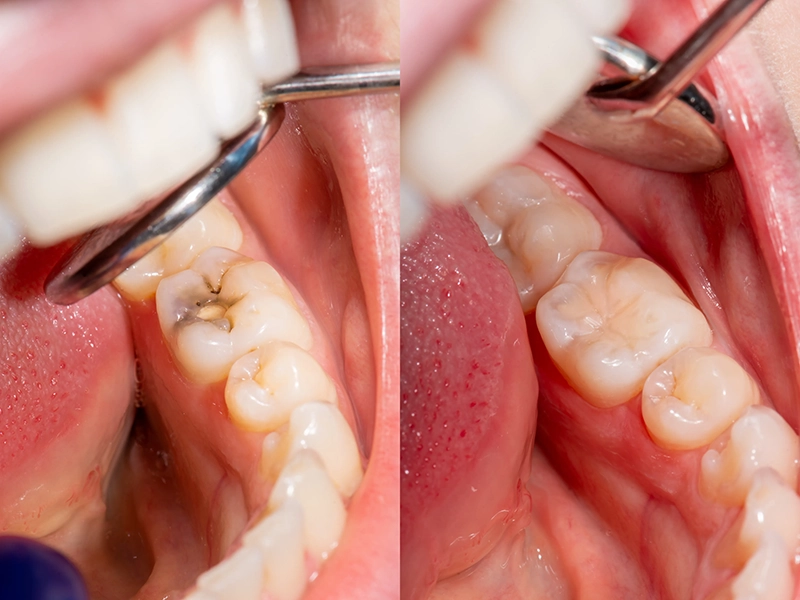
Benefits of Composite Fillings
A modern, conservative approach to restoring damaged teeth.
Natural Appearance
Custom shade-matched to blend invisibly with your surrounding tooth structure.
Mercury-Free
Made from biocompatible resin and glass—no metals or mercury in the restoration.
Conservative Prep
Bonds directly to tooth structure, preserving more healthy enamel than amalgam.
Single-Visit Placement
Placed, shaped, and cured in one appointment with no lab wait time.
Versatile Repair
Treats cavities, chips, cracks, worn edges, and gaps between teeth.
Strengthens the Tooth
Bonding to enamel and dentin adds structural support to the remaining tooth.
The Composite Filling Process
Completed in a single comfortable appointment.
Diagnosis & Shade Selection
The cavity or damage is assessed and a composite shade is selected to match your natural tooth color precisely.
Anesthesia & Preparation
The area is numbed and decayed or damaged tooth structure is gently removed, leaving only healthy enamel and dentin.
Etching & Bonding
The prepared tooth surface is conditioned with an etching agent, then a bonding adhesive is applied to create a strong connection.
Layered Placement
Composite resin is applied in thin layers, each cured with a special light to build strength and natural depth of color.
Shaping & Polish
The filling is sculpted to match your tooth anatomy, then polished smooth for comfort and a natural luster.
When a Filling May Not Be Enough
Composite fillings work best for small to medium cavities and minor repairs. For larger areas of damage where more structural support is needed, inlays and onlays provide a stronger, lab-fabricated alternative. For teeth with extensive decay or fractures, a dental crown may be recommended to fully protect and restore the tooth.
Your dentist will evaluate the size and location of the damage and recommend the most appropriate restoration to balance longevity, aesthetics, and tooth preservation.
Frequently Asked Questions About Composite Fillings
Composite fillings are tooth-colored restorations made from a blend of resin and fine glass particles. They are bonded directly to the tooth to repair cavities, chips, or cracks while matching your natural tooth color.
Modern composite materials are highly durable for small to medium restorations. For very large cavities or high-pressure areas, your dentist may recommend an inlay, onlay, or crown for added strength.
With proper oral hygiene and regular checkups, composite fillings typically last 7–10 years or longer. Avoiding excessive force from grinding or chewing hard objects helps extend their lifespan.
No. Composite fillings are completely mercury-free. They are made from biocompatible resin and glass particles, making them a popular choice for patients who prefer metal-free dentistry.
Yes. Composite resin comes in a wide range of shades. Your dentist selects the closest match to your natural tooth color so the filling blends seamlessly and is virtually invisible.
Yes. Many patients choose to replace aging or deteriorating amalgam fillings with tooth-colored composite for improved aesthetics and a mercury-free option. Your dentist will assess each filling individually.